
MATHEWS PLAMOOTTILPrincipalBJM Govt. College, Chavara, KollamPh. 9447059690Email: mathewsplamoottil@gmail.com |
 |
BIODATA AND SCIENTIFIC CONTRIBUTIONS OF DR. MATHEWS PLAMOOTTIL
Academic Qualifications
BSc Zoology: M. G. University, Kottayam, 1994-96. MSc Zoology, M.G University, Kottayam, 1997-98. (M.G University Rank)
NET, CSIR- UGC, Govt. of India, 2001.
PhD in Zoology, M. G. University, Kottayam, 2015.
Area of Interest
Freshwater fish Taxonomy
Academic Experience
Lecturer in Zoology: Govt. College, Kodencherry, 2007 Jan 22 – 2007June 6
Assistant Professor in Zoology: Govt College, Chavara, Kollam; 2007 June 7- 2021 September 3
Associate Professor in Zoology: Govt. College, Kottayam; 2021 Sept18- 2023 Aug 13
Principal: EKNM Govt. College, Elerithattu, Kasaragod; 11 Sept 2023 – 25 June 2026
Principal: BJM Govt. College, Chavara, Kollam; 27 June 2026 Onwards
Major Research Project
Govt. of India, Department of Science and Technology, SERB, Core Research Grant, 24.6 Lakhs, 2019-22
AWARDS / RECOGNITIONS RECEIVED
| Sl.No | Name of Award | Awarding Agency | Year | ||
| 1 | Best Researcher Award | Kerala State Govt. Biodiversity Board | 2015 | ||
| 2 | SERB-CRG | DST- Govt of India | 2019 | ||
| 3 | Best Ecologist Award | Society for Educational and Scientific Research, Kerala | 2016 | ||
| 4 | Young Scientist of the Year Award | International Federation for Environment and Ecology, West Bengal | 2017 | ||
| 5 | Distinguished Researcher Award | SCIRE SCIENCE LTD,Kottayam | 2017 | ||
| 6 | Har Govind Ghorana Best Scientist | Tamil Nadu Scientific Research Organization, | 2017 | ||
| Award | Pudukottai, TN | ||||
| 7 | Award for Excellence in Research Honorable Mention Certificate | EET-CRS-Uttar Pradesh | 2017 | ||
| 8 | Award of Excellence in Teaching and Research | International Association for Science andTechnical Education, Avadi,Chennai | 2017 | ||
| 9 | Young Scientist Award | Applied Zoologists Association, Research, Odisha | 2017 | ||
| 10 | Best Faculty Award | GRABS Educational and Charitable Trust, TN | |||
| 11 | Fellow | Association for Advancement of Biodiversity Science, Karanataka | — | ||
| 12 | Fellow | Bose Science Society, Tamil Nadu | — | ||
| 13 | Fellow | Society for Educational &Scientific Research, Kerala | — | ||
| 14 | Fellow |
International Academic and Environmental Society, Bihar |
— | |
| 15 | Fellow | Society of Education, Agra, UP | — | |
| 16 | Life member | Indian Science Congress Association, Govt of India | ||
| 17 | Life member | Marine Biological Association of India, Govt of India | ||
| 18 | University Rank for MSc | M.G.University,Kerala | 1999 | |
LIST OF ALL RESEARCH ARTICLES PUBLISHED BY DR. MATHEWS PLAMOOTTIL
(Mathews Plamoottil is both first author & corresponding Author in all articles)
SCOPUS / WEB OF SCIENCE Indexed/ UGC CARE listed
- Plamoottil, M. 2021. Heteropneustes fuscus (Siluriformes: Heteropneustidae), a new catfish species from Kerala, India Biodiversitas, (Scopus Indexed Journal), 22: (12) 87- 98.
- Plamoottil, M & D. 2020. Systomus gracilus a new fish (cypriniformes: cyprinidae) species from west Bengal .Journal of Experimental Zoology India (Web of Science indexed Journal-UGC Journal No.7524). 23 (2): 1033-1038.
- Plamoottil, M & Johnson, R. 2020. Synoptic notes on small Synonymic Cyprinoids of South India, Indian Journal of Applied & Pure Biology (Web of Science indexed Journal), 35 (2), 177-187.
- Plamoottil, M, 2020. Synonymic cyprinoid fishes of west Bengal and Assam: an overview , Journal of Experimental Zoology India (Web of Science indexed Journal- UGC Journal No.7524),23 (1), 279-282.
- Plamoottil, M. Rediscovery and Redescription of Mystus keletius (Valenciennes, 1839) Indian Journal of Applied& Pure Biology (Web of Science indexed Journal), 35 (2), 115-126.
- Plamoottil, M. Systematic Notes on Hypselobarbus carnaticus (Cypriniformes: Cyprinidae) Collected From Bhavani River, Indian J. Applied & Pure Bio (Web of Science indexed Journal). 36 (1), 45-52.
- Plamoottil, M, and Kumar, S. 2019. Fishery resource potential of Manimala River of Kerala, India, Journal of Advanced Zoology (SCOPUS indexed Journal– UGC Journal No. 26304), 40 (1): 22-26.
- Plamoottil, M. Forgotten and insufficiently known large cyprinids of Kerala and adjacent states, Journal of Experimental Zoology, India (Web of Science indexed Journal-UGC Journal No.7524), 24 (1): 459- 464.
- Plamoottil, M & Vineeth, K. 2020. A new cyprinid fish Barilius cyanochlorus from Kerala, India, Biodiversitas (SCOPUS indexed Journal),, 21 (11): 5389-5394.
- Plamoottil, M & Vineeth. K. Rediscovery and redescription of Capoeta puckelli Day after one and half century,. Journal of Experimental Zoology, India, (Web of Science Indexed- UGC Journal 7524), 24 (2): 1305-1309.
- Plamoottil, M & Johnson, R. 2020. Taxonomic notes on Puntius species of south India, Egyptian Academic Journal of Biological Sciences- Zoology, (Web of Science Indexed), 12 (1): 93- 106.
- Plamoottil, M & Vineeth, 2020. Discovery of a new teleost fish Puntius ocellus from Kerala, India Egyptian Academic Journal of Biological Sciences- Zoology, (Web of Science Indexed), 12 (2): 93- 102
- Plamoottil, M. 2020. Puntius sanctus, a new fish (Cypriniformes: Cyprinidae) species from Tamil Nadu, India, Bioscience Research (Scopus indexed), 17 (1): 560-567.
- Plamoottil, M & Debargya Maji, 2020. Taxonomic notes on Puntius chola. Journal of Experimental Zoology, India, (Web of Science Indexed- UGC Journal No.7524), 23: 47-51.
- Plamoottil, M. 2019, Taxonomic notes on Puntius dorsalis (Jerdon, 1849). University Journal of Zoology, Rajshahi, west Bengal, (SCOPUS indexed Journal), 37: 43-47.
- Plamoottil, M. Puntius kyphus (Cypriniformes: Cyprinidae) a new cyprinoid fish species from Kerala, India, Journal of Experimental Zoology India (Web of science indexed- UGC Journal No.7524), 22: 713-718.
- Plamoottil, M & Vineeth, K. 2020. Rediscovery of Gobio augraoides Jerdon firstly after its description in 1849.Journal of Experimental Zoology, India (Web of Science Indexed- UGC Journal No.7524), 23 (2): 1039-1042.
- Plamoottil, M. 2020. Hypselobarbus procerus a new cyprinid fish species from Kerala, India. Uttarpradesh Journal of Zoology (Web of Science indexed-UGC listed at the time of publication), 42 (24): 696-705.
- Plamoottil, M. Taxonomic notes on native cyprinoid fishes of southern Karnataka, India, Egyptian Academic Journal of Biological Sciences. Zoology (Web of Science indexed), 14(1): 119-134.
- Plamoottil, M. 2022.Osteochilichthys elegans, a new cyprinid fish from Kerala, India, Bioscience Research (SCOPUS indexed),19 (2): 974-990 .
- Plamoottil, M, 2021. Osteochilichthys formosus, a new cyprinid fish from Kerala, India, Bioscience Research (SCOPUS Indexed Journal) ,19 (3): 1311-1320.
- Plamoottil, & Vineeth, K. 2021. Discovery of a new cyprinid fish, Hypselobarbus nitidus– from Kerala, India, Egyptian Journal of Aquatic Biology and Fisheries (SCOPUS Indexed Journal), 26 (2): 511 – 528.
- Plamoottil, M. & Kumar, P.B. 2022. Biographic notes on earlier overseas fish taxonomists of south India, Journal of Experimental Zoology, India (Web of Science Indexed Journal- UGC Journal 7524) , 25 (1): 147- 154.
- Plamoottil, M. 2022. Rediscovery of Barilius rugosus Day (Cypriniformes: Cyprinidae) firstly after its description in 1867. Indian Journal of Applied and Pure Biology (Web of Science Indexed Journal), 37(1), 91-101.
- Plamoottil, M. and Kumar, P. B. 2021. Trends in Fisheries Production with emphasis on Aquaculture Fish Production: A Comparative Analysis of India and China. Egyptian Journal of Aquatic Biology and Fisheries (SCOPUS Indexed Journal) , 26 (1): 40- 45.
- Plamoottil, M. and Kumar, P. B. 2022. The Prospects and Problems of Rural Household Based Aquaculture: A Study of Selected Fish Farming Households in Kerala, Egyptian Journal of Aquatic Biology & Fisheries (SCOPUS Indexed Journal), 26(2): 61-84.
- Plamoottil, M & Johnson, R. 2022. Systematic notes on some cyprinid fishes collected from Kasargod district of Kerala, India, Egyptian Journal of Aquatic Biology and Fisheries (SCOPUS Indexed Journal), 26(5): 939 – 954.
- Plamoottil, M. 2018. Taxonomic notes on estuarine fishes collected from lower reaches of Manimala River. Journal of Experimental Zoology, India, .(Web of Science Indexed- UGC Journal 7524)) 21(1): 453-456.
- Plamoottil, M. and G. 2017. Notes on distribution of fishes in Manimala River, Journal of Advanced Zoology. (SCOPUS Indexed–UGC Journal No. 26304) 38.1): 14- 21.
- Plamoottil, M & Abraham, N. P, 2014. Macrognathus fasciatus (Synbranchiformes; Mastacembelidae), a new fish species from Kerala, India. Journal of Experimental Zoology, India.(Web of Science Indexed- UGC Journal No.7524), 17: 49-54.
- Plamoottil, M & Abraham, N. P, 2013. Indigenous fishing methods of Manimala River, Kerala, India. Journal of Advanced Zoology (SCOPUS Indexed- UGC Journal No. 26304), 34 (2), 92- 102.
- Plamoottil, M. and Abraham, N. P, 2013. Rediscovery of Pristolepis malabarica after one and half century. Journal of Advanced Zoology (SCOPUS Indexed- UGC Journal No. 26304), 34 (1), 28- 35
- Plamoottil, M. & Abraham, N. P, 2013 Mystus indicus and heoki, two new cat fishes from Kerala, India. Biosystematica (Peer Reviewed Taxonomy Journal), 7(1); 43-58.
- Plamoottil, M. & Abraham, N. P, Glyptothorax elankadensis, a new species of sisorid fish from Manimala River, Kerala, India. Biosystematica(Peer Reviewed Taxonomy Journal),, 6 (2), 17- 25.
- Plamoottil,M, Pooja S and Ardra S. K. 2019. Taxonomic notes on some freshwater fishes collected from Chavara of Kerala, India, Journal of Experimental Zoology India (Web of Science Indexed- UGC Journal No.7524), 22 {1}. 139-144.
- Plamoottil, M. Rediscovery of Leuciscus stigma after one and a half century. Journal of Applied Zoological researches, 29 (1): 238- 242. (UGC Journal No21458)
- Plamoottil, M Rediscovery of Gobius malabaricus Day from its type locality after one and a half century. Journal of Applied Zoological researches, 28 (2): 238- 242. (UGC Journal No21458).
- Plamoottil, M. 2017. Preliminary taxonomic studies on Sillago species of Kollam district of Kerala, India. International Journal of research Studies in Biosciences, 5 (6): 4-9. UGC Journal No. 21458).
- Plamoottil, M. 2016. Puntius euspilurus, a new fish species from Kerala, India, International Journal of Research Studies in Biosciences, 4 (9): 1-6. UGC Journal No. 21458)
- Plamoottil, 2017. Taxonomic notes on channa species collected from Thiruvalla, Kerala. International Journal of research Studies in Biosciences, 5 (7): 13- 17. UGC Journal No. 21458)
- Plamoottil, M. 2014. Pristolepi spentacantha, a new species of fish from Kerala, India, International Journal of Scientific Research, 3 (5): 552- 554. (UGC Journal no, 49217)
- Plamoottil, 2018. Taxonomic notes on native cyprinoid fishes of southern Kerala. Advances in Bioresearch, 9 (1): 240-248 (UGC Journal no. 1244).
- Plamoottil, 2017. Taxonomic notes on Mystus species of northern Kerala. Journal of Aquaculture: Research and Development, 8 (6): 1-4. 9. (SCOPUS–Scimago-UGC listed)
- Plamoottil, M. Systematic notes on Osteobrama bakeri Day collected from Travancore. International Journal of Zoological Investigations, 3 (2): 175- 178. (Web of Science Indexed Journal).
- Plamoottil, M and Abraham, N. P. 2013. Endemic fishing Gear usage in Manimala River, Kerala, India. In Proc.Natural Resource Management: A key to sustainability, published by Dept. of Botany, Assumption College, Changanacherry. 109-113.
- Plamoottil, M. Rediscovery of Capoetaambhibia after one and a half century. In Proc.National Seminar ‘Emerging challenges in Biodiversity conservation with special reference to recent trends in Ecotoxicology’ (ISBN 978: 93-5291-469-2) Published by Dept. of Zoology, MSM College, Kayamkulam, 101-109.
OTHER ARTICLES
- Plamoottil, M and Zupancic, 2017. Labeofiliferus, a new fish species from Kerala, India. Bioscience Discovery, 8 (4):301-306. {UGC Listed}
- Plamoottil, M and Win, 2017. Pristolepis pauciradiatus, a new fish species from Kerala, India. Bioscience Discovery. 8 (3): 613-618. {UGC Listed}
- Plamoottil, M. Pristolepis procerus, a new fish species from Kerala, India. European Journal of Zoological Research, 5 (1):40-44 (Peer Reviewed)
- Plamoottil, M and Win, 2017. On some destructive fishing methods of Travancore. Journal of Zoological and Bioscience Research, 4 (1): 6-12. {Peer Reviewed Journal from Canada}
- Plamoottil, M. Mystuscatapogon, a new fish species from Kerala, India. Journal of Research in Biology, 6 (2), 1967– 1976| {Peer Reviewed}
- Plamoottil, M. Systematic Accounts on Percoid fishes of Manimala River, Travancore. International Journal of Research Studies in Zoology, 2 (5): 12-23. {Peer Reviewed}
- Plamoottil, M. Taxonomic Notes on some cultivable fishes of South India, International Journal of Research Studies in Zoology, 2 (4): 15- 26 {Peer Reviewed}
- Plamoottil, M. 2016. Rasbora ataenia, a new fish species from Kerala, India. International Journal of Innovative Studies in Aquatic Biology and Fisheries, 2 (5): {Peer Reviewed}
- Plamoottil, M. Systomuslaticeps, a new fish species from Kerala, India, International Journal of fauna and Biological Studies, 3(5): 92-96. . (Peer Reviewed)
- Plamoottil, M. 2016. Systematic notes on the hill stream cyprinid fishes of Manimala River, Kerala, India. International Journal of Research Studies in Zoology, 2 (3): 39- 46. {Peer Reviewed}
- Plamoottil, M. Systematic Studies on the Catfishes of Sasthamcottah Lake of Kerala, India, International Journal of Research Studies in Zoology, 2 (2): 9- 16. {Peer Reviewed}
- Plamoottil, M. Taxonomic Notes on the exotic fishes of Manimala River. Journal of Environment and Zoological Studies, 3(5): 1799-1808. {Peer Reviewed}
- Plamoottil, M. 2015.Taxonomic notes on the catfishes of central Travancore. Journal of Zoological and Bioscience Research. 2 (3): 6- 17. {A Peer Reviewed Canadian Journal}
- Plamoottil, 2015.Validation of PristolepispentacanthaPlamoottil, 2014. International Journal of Pure and Applied Zoology, 3 (2):142- 143 {UGC Listed}
- Plamoottil, M, Ichthyodiversity of Manimala River of Kerala, India. Journal of Zoology and Bioscience Research, 2 (2): 26-34. {A Peer Reviewed Canadian Journal}
- Plamoottil, M. Puntius dolichopterus, a new fish species from Kerala, India. International Journal of Pure and Applied Zoology, 3 (3): 226-231. {UGC Listed}
- Plamoottil, M& Abraham, P, 2014. Macrognathusalbus, a new fish species from Kerala, India, International Journal of Pure and Applied Zoology, 2 (2), 100-105. {UGC Listed}
- Plamoottil, & Abraham, N. P, 2014. Mystuskeralai, a new fish species from Kerala, India, International Journal of Pure and Applied Zoology, 2 (3): 196-205. {UGC Listed}
- Plamoottil, M. & Abraham, P, 2014. Rediscovery and redescription of Mystus armatus Day. International Journal of Research in Fisheries and Aquaculture, 4(1): 18-21. {UGC Listed}
- Plamoottil, M. Batasio flavus, a new catfish from Kerala, India. Journal of Research in Biology, 3 (5). 74- 76. {Peer Reviewed}
- Plamoottil, M. Puntius nigronotus, a new fish species from Kerala, India, Journal of Research in Biology, 4 (2): 1581-1588. {Peer Reviewed}
- Plamoottil, M. Puntius nelsoni, Systomuschryseusand S. rufusthree new fish species from Kerala, India. International Journal of faunal and Biological Studies, 1 (6), 135-145 {Peer Reviewed}
- Plamoottil, M& Abraham, George, S. 2014. Development of molecular markers for the study of fish fauna of Manimala River, International Journal of Biological Technology, 5 (3), 1-6. {Peer Reviewed}
- Plamoottil, M, 2013. Rediscovery of Pristolepis marginataJerdon (Teleostei: Percomorpha: Pristolepididae) after one and a half century Research Journal of Animal, Veterinary and Fishery Sciences, 1 (7), 1-5.
- Plamoottil, M& Abraham, P. 2013. Mystus menoni, a new fish species from Kerala, India. International Journal of Pure and Applied Zoology, 1(4): 315-325. {UGC Listed}
- Plamoottil, M. & Abraham, N. P, Horabagrus melanosoma, a new fish species (Actinopterygii: Siluriformes) from Kerala, India, International Journal of Pure and Applied Zoology, 1 (4): 280-288. {UGC Listed}
- Plamoottil, M. & Abraham, N. P, 2013.Puntius viridis a new fish species from Kerala, India, Journal of Research in Biology, 3 (7): 1093- 1104. {Peer Reviewed}
- Plamoottil, M. & Abraham, P, 2013.Rediscovery of Mastacembelusmalabaricus after one and Half Century. Research Journal of Animal, Veterinary and Fishery Sciences, 1(8): 6-11.
Popular Scientific Articles Written by Mathews Plamoottil
- Plamoottil, M. Kanangonum kerala sundariyum” (Malayalam). Aarayam Magazine (Published by Kerala Govt. Forest dept), 41: 42- 43.
- Plamoottil, 2019. “Paralum kooralum poovaliparalum” (Malayalam). Aarayam Magazine (Published by Kerala Govt. Forest dept), 40 : 38-39.
SIGNIFICANT SCIENTIFIC CONTRIBUTIONS OF MATHEWS PLAMOOTTIL
- Discovered, described and gave scientific name to 33 (thirty three) new fishes, which were unknown to scientific field.
- Rediscovered 11 (eleven) forgotten fishes after one and half century and resurrected from their synonymy with others. .
- Deposited 113 (One hundred thirteen) topotypic rare fish specimens (collected by Mathews Plamoottil) in Government of India museums.
- Written and published 74 (Seventy Four) peer reviewed research articles and 2 (Two) popular articles.
- Inserted DNA sequences of 36 (Thirty Six) rare fishes in
- All congeners of genera Puntius, Barilius, Systomus, Hypselobarbus, Heteropneustes, Pristolepis, Mystus, Osteochilichthys, Macrognathus etc were procured from their type localities.
- Taxonomic ambiguity which had existed on the genera Puntius, Mystus, Barilius, Systomus, Hypselobarbus, Osteochilichthys, Heteropneustes was eradicated.
- Changed the scientific name of Osteochilicthys nashii to Osteocheilichthys
SCIENTIFIC FINDINGS OF MATHEWS PLAMOOTTIL
Mathews Plamoottil, is a freshwater fish taxonomist conducting taxonomic research works on the freshwater fishes of India. He discovered & gave scientific name to 35 new fish species which were unknown to scientific world; all these new fishes have received Zoobank Reg. No from ICZN, the official authority for naming animals. He DNA sequenced and uploaded 29 fishes in GenBank and got Accession Numbers. He wrote and published 74 first author research articles in scientific journals. He rediscovered 11 forgotten fishes after 1.5 century.
Mathews Plamoottil could collect many rare fishes from the water bodies of Kerala, neighboring states of India and Myanmar. His many rare freshwater fish specimens are now deposited in the museums of Zoological Survey of India at Chennai, Kozhikode, Kolkata, Pune, Shillong, Hyderabad and Andamans and Nicobar Islands; of these specimens, his 35 species are type species with valid registration numbers of the museum and Zoobank register numbers received from International Commission of Zoological Nomenclature. He discovered, gave scientific name and described 35 new fishes. He is the south Indian born researcher who has discovered and given scientific name to more number of freshwater fishes from water bodies of India. His new fishes are Glyptothotax elankadensis, Horabagrus melanosoma, Mystus indicus, M. keralai, M. heoki, M. menoni, M. catapogon, Macrognathus fasciatus, M. albus, Puntius viridis, P. nelsoni, P. nigronotus, P. dolichopterus, P. kyphus, Systomus chryseus, S. rufus, S. gracilus, Pristolepis pentacantha, P. pauciradiatus, P. procerus, Batasio flavus, Labeo filiferus, Puntius euspilurus, Systomus laticeps, Rasbora ataenia, Puntius sanctus, P. kyphus, P. ocellus, Barilius cyanochlorus, Hypselobarbus procerus, H. nitidus, Heteropbeustes. fucsus, Osteochilichthys formosus and Osteochilichthys elegans.
Importance of Mathews Plamoottil’s discovery of new fish species
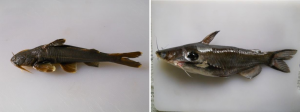
Glyptothorax elankadensis is the first new species of Mathews Plamoottil. It is also the first species of the genus Glyptothorax described from south of Palakkad in Kerala and the large sized Glyptothorax described from India;
Horabagrus melanosoma Plamoottil & Nelson is the first species of genus Horabagrus discovered, named and described by an Indian researcher. It is a fully black colored Horabagrus.
Rasbora ataenia Plamoottil is the new fish species of the genus Rasbora described after 150 years; in other words it is the only Rasbora species described by a south Indian researcher. Compared to other it Rasbora species, it is without a mid lateral color band.
Mathews Plamoottil’s new Labeo species namely Labeo filiferus is also only one species of Labeo discovered, described and given scientific name by a south Indian Researcher from south India. This new species is characterized by deep black color and filamentous fins.
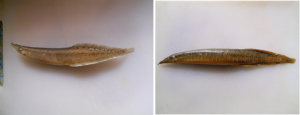
Mathews Plamoottil’s new spiny eels namely Macognathus fasciatus and M. albus are also remarkable by the fact that species of this genus was discovered after one and half century. M. fasciatus is characterized by the possession of lateral bands; M. albus is unique in having a unspotted body.
Pristolepis pentacantha Plamootil is unique in the possession of 5 anal spines and 16 dorsal spines. It was the first time a Pristolepis species with 5 anal spines was discovered; Mathews Plamoottil procured it from hill ranges of Wayanad and he scientifically named it.
Pristolepis pauciradiatus Plamoottil & Win was discovered and scientifically named from fresh water body of Myanmar. It is characterized by the possession of lesser number of anal spines. It was the first time a Pristolepis species with least number of anal spines was discovered. It was described in collaboration with Dr, Than Win, a researcher from Myanmar.
Puntius kyphus Plamoottil is a unique new fish species discovered, described and given scientific name from Thiruvalla of Kerala. It is characterized by the presence of non -ossified last simple dorsal fin ray. But it showed many characters of fishes having ossified last simple dorsal ray.
Puntius sanctus, Plamoottil is a new species collected from Velamkanni in Tamil Nadu. It is showing many similarities with Puntius chola Hamilton of west Bengal. Detailed studies and taxonomic comparisons had been made between both these species. For this, all relative Puntius species were taxonomically analyzed. These studies proved that the Puntius species from Tamil Nadu as a new species (P. sanctus).
Plamoottil’s new species Systomus gracilis, is a very unique Systomus species which was discovered from west Bengal during an exploratory survey. This species showed many distinct differences from other relative Systomus species such as Systomus sarana, Systomus subnasutus, S. chryseus, S, rufus and S. laticeps. Specimens of Systomus subnasutus were collected from Puducherry for this purpose. All other Systomus species were procured from Kerala and other regions, from their type localities. Systomus species collected from west Bengal showed many distinct differences from its relative species; mainly, its anal fin was with 6 branched rays in contrast to 5 branched rays in all other Systomus species. Detailed studies conducted on this species and proved that Systomus from west Bengal as a new species, Systomus gracilis. The species name is referring to its thin body.
Puntius nigronotus Plamoottil was discovered, described and scientifically named by Mathews Plamootitl from a difficult to reach site of mountain ranges of Wayanad, in Kerala. It showed many distinct differences from its congeners in fin ray counts and its color.
Puntius ocellus: Mathews Plamoottil’s new species Puntius ocellus collected from Kazargod district of Kerala was also proved as a new fish species. It is having a round black spot on caudal fin base which is surrounded by a golden ring around it; it is also remarkable in having an elongated and pointed snout; this cyprinid fish was examined in detail and compared well with its congeners. All their relative species such as P. chola, P. dorsalis, P. nelsoni, P. viridis, P. parrah, P. nigronotus were procured from their type localities and examined and compared with the new species for this purpose. These taxonomical studies proved that Puntius ocellus is a new fish.
Barilius cyanochlorus was another new fish species discovered, described and scientifically named by Mathews Plamoottil. It showed many valid distinctions from its congeners; so all relative species of this rare fish were procured from their respective type localities; many specimens of Barilius bakeri, B. canarensis, B. malabaricus, B. ardens, B. bendelisis were collected by Mathews Plamoottil, for this purpose, from various water bodies of south India. All these congeners and B. cyanochlorus were taxonomically examined in detail which led to the identity of the new fish.
Hypselobarbus procerus Plamoottil, was a unique, deep bodied Hypselobarbus species collected, by Mathews Plamoottil from Attappady mountain ranges in Palakkad district in Kerala It showed many distinct differences from its congeners; so all its relative species such as Hypselobarbus carnaticus (collected from Bhavani River in Kerala), H. jerdoni (from Chickmanglore, Karnataka), H. basavaraji,
- pulchellus, H. dobsoni (these three were examined from ZSI Chennai), Hypselobarbus micropogon, Hypselobarbus kushavali (these two were examined from Manomaniam Sundaranar University, Tamil Nadu) were taxonomically analyzed and compared with deep bodied Hypselobarbus. It proved that the latter is a new species, unknown to science. Mathews Plamoottil named it as Hypselobarbus procerus and a detailed scientific article was written and published proving its existence as a new species.
Hypselobarbus nitidus is another beautiful new species of Mathews Plamoottil described from northern Kerala. It was misidentified by many as Hypselobarbus jerdoni (Day, 1870), a cyprinid fish with hyaline fins. But Mathews Plamoottil collected specimens of H. jerdoni from Karanataka, its type locality and compared with the red finned Hypselobarbus. Detailed taxonomic studies proved that the red finned Hypselobarbus is a new species. H. nitidus is with weak and non osseous last simple dorsal fin ray where as H.jerdoni is with strong and osseous last simple dorsal ray.
Heteropneustes fuscus Plamoottil’s discovery was the one of the famous finding conducted in 2022. It was the description and scientific naming of the black stinging catfish of Kerala as Heteropneustes fuscus. All the stinging catfishes of Kerala were misidentified as Heteropneustes fossilis; actually the latter is a fish described from Tranquebar in Tamil Nadu. During a survey to collect rare fishes from Tamil Nadu, Mathews Plamoottil could collect some specimens of H. fossilis which on careful analysis proved to be different from Heteropneustes species of Kerala. This lead dr. Mathews Plamoottil to collect all species of Heteropneustes from their type localities in Kerala and Tamil Nadu; detailed classical and molecular taxonomic studies were conducted on Tamil Nadu Heteropneustes and Kerala Heteropneustes; it proved that both these species are different and can easily be distinguished as two distinct species. So Mathews Plamootil described Kerala Heteropneustes and gave it scientific name as Heteropneustes fuscus and retained the name H. fossilis to Tamil Nadu species. It was a very important research finding done on the fishes of south India during the last century.
Osteochilichthys elegans Plamoottil was a new fish discovered, described and scientifically named from Palakkad Mountain Ranges in Kerala. It showed marked differences from all other Osteochilichthys species; mainly without any mid lateral color band and also lacking color stripe on anal fin. Detailed taxonomic studies were conducted on the new fish and an article published based on the findings.
Osteochilichthys formosus: Another important discovery of Mathews Plamoottil was of the description and scientific naming of Osteochilichthys formosus, a new fish from Kazargod in Kerala which was unknown to science until this discovery. Type specimens of these fishes were misidentified as Osteochilichthys nashii until this time. So Ostecochilichthys nashii were also collected directly from Karnataka during this research project and DNA sequencing and Bar Coding were done for both O. Nashii and the new species. DNA sequences of both species showed marked differences; it persuaded for further taxonomical studies, which resulted in the identity of the new species Osteochilichthys formosus.
New Mystus species of Mathews Plamoottil: Five new species of Mystus were discovered, named and described by Mathews Plamoottil namely Mystus indicus, M. keralai, M. heoki, M.menoni and M. catapogon. It is important in the fact that it was the first time a new species of genus Mystus was discovered from the water bodies of Kerala after 1865 when Francis Day discovered Mystus armatus from Kerala. A confusion had conquered the minds of many Indian and foreign taxonomists regarding the identity of many Mystus species which had been discovered and described by the foreign scientists from the water bodies of Kerala. Due to this difficulty they dared not to conduct taxonomic studies on any species of Mystus. Mathews Plamoottil could collect all Mystus species of Kerala, that too from their type localities, and eradicated the confusion existed on the species.
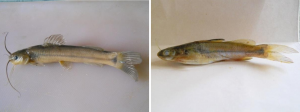
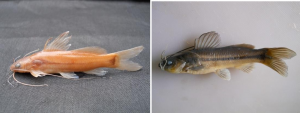
Mathews Plamoottil discovered, described and scientifically named Mystus indicus from central Travancore; it was characterized by the unique taxonomic features pertaining to cephalic fontanel and occipital spine, Mystus heoki and M. menoni were collected by Mathews Plamoottil from hill ranges of Idukki district. Both these were peculiar in having a thick mid lateral color band on the trunk region. But the former is with a slim body than the latter. Mathews Plamoottil’s new species Mystus catapogon and
- keralai were characterized by the possession of very elongated maxillary barbels which extend beyond caudal fin base. These are the new fish species of this category described from Kerala after one and half century.
Finding and describing a new fish species is a difficult task and consuming much time; an expert scientist may sometimes discover and describe one or two new fishes in his /her entire research career. But during the last 13 (Thirteen) years, Mathews Plamoottil could discover, describe and could scientifically name 35 new fishes which were unknown to science. Relevance of these findings is that these 35 new species are belonging to 14 (fourteen) different genera viz; Puntius, Systomus, Rasbora, Barilius, Labeo, Hypselobarbus, Osteochilicthys. Glyptothorax, Horabagrus, Batasio, Mystus, Macrognathis, Pristolepis and Heteropneustes. These 14 genera are with different diagnostic characters and with entirely different congeners. So to newly describe these, all the comparative fish specimens must be collected from their type localities or must be viewed from their museums. For describing various Puntius species all relative species of these Puntius species were collected from their type localities and some examined directly from the Govt. museum in which they are deposited. Puntius euspilurus deposited in ZSI, Hyderabad, Puntius madhusoodani deposited in St. Alberts college, Ernakulam, Kerala, Puntius nigronotus, P. viridis, P. dorsalis, P. chola, P. sophore, P. parrah, and P. cauveriensis depsited in museum of Zoological Survey of India Kolkata, west Bengal, Puntius dolichopterus deposited in ZSI Andamans and
- nelsoni of ZSI Calicut, Kerala were examined and taxonomically analyzed for this purpose. For describing Barilius cyanochlorus, an understanding of all Barilius species of Indian water bodies must be kept in mind and all congeners must be collected from their type localities and must be made available to future researchers in this field. So various relative species of Barilius cyanochlorus such as B. gatensis was collected from Nilghiri hills, B.malabaricus and B. canarensis from Kazargod in Kerala, B. bendelisis from Karnataka and B,bakeri from Mundakkayam in Kerala were collected are taxonomically analysed. Before the publication of Barilius cyanochlorus, a clear idea on various Barilius species of India was lacking in the minds of ichthyotaxonomists of India. It was the main impediment in discovering new species of this genus. As all species of Barilius were collected during this project, the former confusions were removed and ambiguities were eradicated; moreover all these specimens of Barilius are now deposited in Zoological survey of India museums and so it can be accessed and studied by anyone.
Describing a new species of Systomus was a trying endeavor for all taxonomists; it was because Systomus sarana and S. subnasutus was considered as a single species by some, even though it was described as two distinct species by Francis Hamilton (1822) and Valenciennes (1842). For the description of various Systomus species, S. sarana,S. subnasutus and all other relative Systomus species were procured from their type localities and now deposited in recognized museums of India. It paved way for further research work in this genus.
Various Hypselobarbus species of India were also met with serious taxonomic ambiguity; especially H. carnaticus and H. jerdoni. Even though these species were described from Kerala and Karanataka respectively, many of the Cyprinid fishes of Kerala were misidentified as these species. It created mere confusions. Moreover Francis Day’s descriptions in various volumes on the characters of H. jerdoni were also different. During this project H. jerdoni, H. carnaticus and its close congeners were procured from their type localities and taxonomically analysed and deposited in Govt museums of India. It cleared the confusions existed in various Hypselobarbus species of south India.
Osteochilicthys was a very little studied cyprinid fish genus of Indian fresh water bodies. No new fishes of this genus had been described from India, excluding O. longidorsalis described by Pethiyagoda & Kottelat in 1994. Many confusions existed in the identity of O. brevidorsalis and O. thomassi. But Mathews Plamoottil could collect all Osteochilicthys species of India from their type localities and could deposit in ZSI museums; Osteochilicthys nashii was collected from Karnataka, O. longidorsalis from Trichur, O. thomassi collected from Palakkad and O brevidorsalis from base of Nilghiri hills. It gave a distinct picture on the various species of this genus. Confusions had been existed on the species Gobio augraoides of Jerdon (1849). Mathews Plamoottil could examine various specimens of O. nashii collected from Karanataka and proved that Jerdon (1849)’s species is nothing but O. nashi and so Gobio augraoides were renamed as Osteochilicthys augraoides.
Scientific naming of Heteropneustes fuscus was of great relevance in scientific world; most of the Asian stinging catfishes were considered as Heteropneustes fossilis (Bloch, 1794) until recently. No endeavor was taken by any scientist to taxonomically analyze the Heteropneustes species of different parts of India. Mathews Plamootil could conduct molecular level studies, including DNA bar coding and proved that Heteropneustes species in Kerala are not H. fossilis and named it as Heteropneustes fuscus. This prime discovery has great impact in scientific world and it also received wide publicity and media coverage; all dailies and All India Radio reported discovery of Heteropneustes fuscus.
Importance of rediscovery findings of Mathews Plamoottil
Mathews Plamoottil rediscovered and redescribed 11 fishes after one and a half century; they are Pristolepis marginata, P. malabarica, Mastacembelus malabaricus, Mystus amatus, Mystus keletius, Gobius malabaricus, Gobio augraoides, Capoeta puckelli, Leuciscus stigma, Barilius rugosus and Puntius amphibius . It was believed, for the last one and a half century, that Pristolepis maginata is a percoid fish with only three anal spines; it is because no one could find a Pristolepis species with more than three anal spines. But Jerdon (1849) who described it mentioned that it bears four spines. Mathews Plamoottil could rediscover and redescribe the four anal spined original Pristolepis maginata from Mananthavady River of Wayanad. Many specimens of Pristolepis marginata are now deposited, by this researcher, in the museum of Zoological Survey of India, Kolkata, the national museum of India. MathewsPlamoottil was also able to rediscover and redescribe Mystus amatus. It was believed that Mystus armatus was a synonym of M. oculatus as the latter shows many similarities to the former. This researcher could collect both these species from their type localities in Karavannoor River and after careful examination and analysis Mystus armatus was resurrected from its synonymy with M. oculatus. Both these species have been now deposited in ZSI museum at Kolkata. This researcher could also rediscover and redescribe Mastacembelus malabaricus. He also renamed it as Mastacembelus malabaricus from Macrognathus malabaricus. Dr. Plamoottil could also rediscover and redescribe Gobius malabaricus, Leuciscus stigma and Capoeta amphibia from the water bodies of Kerala after one and half century. Steven Grant (1999, 2010) erroneously renamed ‘Hara malabarica’ as Mystus canarensis based on his collection from Wayanad. But Mathews Plamoottil collected original specimens of ‘Hara malabarica’ from Mundakkayam and proved the neotype designation of Grant as invalid.
Rediscovery of Capoeta puckelli: Capoeta puckelli was described by Day (1868) from Bangalore. His description was based on a single specimen given to him by Major Puckell. Day (1868) described it in detail and could demarcate it from all its congeners. But all later scientists omitted this name from all their literature and treated as synonym of other Puntius species. Researchers after Day (1868) treated it as an invalid species; its name and details have been disappeared from most of the taxonomic literature; it was considered as a forgotten species. Mathews Plamoottil could collect original specimens of Puntius puckelli from its type locality at Bangalore and detailed taxonomic studies were conducted on it. It presented amazing results. These studies proved that P. puckelli is not a forgotten species and it is a distinct species restricted in its distribution in Bangalore only. An article was also written and proved the identity of P. puckelli. Specimens (Neotypes) of this very rare species are now deposited in Zoological Survey of India museum at Portblair in Andamans (ZSI/ANRC/M/27239). Rediscovery of Puntius puckelli was a wonderful scientific finding in the field of taxonomy in this decade. This species and the article describing this have also received Zoo bank register number from International Commission of
Zoological Nomenclature.
Rediscovery of Barilius rugosus: Barilius rugosus was described by Francis Day from the mountain streams of south India. Even though he described this species distinctly, himself and the later authors kept away from this name intentionally or inadvertently. Day himself, in his later volumes, was suspicious about the identity of this new species. In the original description, B. rugosus was compared with B. bakeri Day. But in his ‘Fishes of India’…’, Day treated Barilius rugosus as a synonym of B.gatensis Jerdon, who described three new species of this genus from south India, avoided B. rugosus from all his accounts. Gunther treated B. rugosus as a distinct species. Beavan not recognized the identity
- rugosus in his accounts. Talwar and Jhingrandid not recognize the identity of the Day’s Barilius. Menon catalogued it as a synonym of Barilius gatensis. Jayaram eluded rugosus from his all-taxonomic accounts including ‘The freshwater fishes of the Indian region’. Knight et alavoided the name B. rugosus from their description of B. ardens. B. rugosus is currently a forgotten species even though it was described originally in much detail. Researchers after Day were oblivious about the identity of B.rugosus, mainly because of the neglect of this species by the original discoverer himself. Moreover, it had not been procured by them from its type locality after its original description. Barilius rugosus was not an uncommon species at the base of Nilgiri hills especially in Bhavani and Siruvani Rivers. Unfortunately, Bhavani and Siruvani, two perennial Rivers, are the least explored water bodies in south India for taxonomic studies: especially part of these Rivers at Palakkad Mountain ranges in Kerala-Tamil Nadu border. Serious ichthyotaxonomic studies conducted on eastern parts of Bhavani River along the base of Nilgiris were also scarce. Adventurous and dangerous nature of this fast flowing and rocky bottom stream may be a hurdle for many researchers to conduct taxonomic studies on the fish fauna in it. Furthermore, most of the workers were confused between B. rugosus and B. gatensis; both of these species were described from south Indian mountain streams, rugosus from ‘the Bowany and Seegoor Rivers, (Now Bhavani and Siruvani Rivers) and the rapid streams along the lower slopes of the Neilgherries’ (Now Nilgiris) and gatensis from ‘fresh waters that descend from the mountains of the Gates’ (now Western Ghats). As per original descriptions, B. rugosus possess many distinct morphometric and meristic differences from B. gatensis. Mathews Plamoottil could collect many original specimens of Barilius rugosus from Bhavani River at Palakkad Mountain ranges which resulted in the rediscovery of Barilius rugosus after one and half century. For this purpose this researcher could collect all congener species of B. rugosus from Kerala and Karnataka. Detailed meristic and morphometric analysis revealed that Barilius rugosus is a distinct species with many valid differences from its congeners. An article was also written and published proving the rediscovery of Barilius rugosus. This rare species and the article describing this species received zoo bank register number from International Commission of Zoological Nomenclature. The specimens of B. rugosus collected during this project have been deposited in Zoological Survey of India museum at Pune in Maharashtra.
Clearing the ambiguity of Puntius chola: There were many taxonomic ambiguity and systematic confusion in the identity of Puntius chola. But many Kerala and Tamil Nadu cyprinid fishes were erroneously treated as P. chola. So the specimens of the latter fish were collected by Mathews Plamoottil from west Bengal and compared with the similar south Indian fishes and taxonomic analysis were done. It resulted in the eradication of taxonomic confusion of this fish by writing an article. By this study, north Indian species are named as Puntius chola and south Indian forms are Puntius sanctus.
Clearing the ambiguity of Puntius dorsalis: Much confusion had existed in the taxonomic identity of Puntius dorsalis. This fish had been originally discovered and described by Jerdon (1849) from Tamil Nadu. But many fishes of Kerala were also erroneously treated as P. dorsalis. Original Puntius dorsalis was with extremely long snout and head; but many other Puntius species of Kerala were considered as P. dorsalis until now. PI’s exploratory survey toTamil Nadu, resulted in the eradication of this ambiguity. Specimens of Puntius dorsalis were procured from its type locality and detailed taxonomic analysis was done. These specimens are now deposited in ZSI museums for future studies. An article has also been published on this study in an international journal during this project.
Rediscovery of Mystus keletius: Another significant finding was the rediscovery of Mystus keletius. The latter was considered as a synonym of Mystus vittatus. and M. montanus. Mystus keletius was originally described from Pondicherry. Due to lack of holotype, paratypes or topotypes many Mystus species of Kerala and Tamil Nadu were wrongly identified as Mystus keletius. During an exploratory survey in Pondicherry, for procuring cyprinid fishes, Principal Investigator of this project could collect some topotypic specimens of Mystus keletius from Pondicherry; when taxonomically analyzed it showed distinct differences from all other Mystus specie of Kerala and Tamil Nadu; in order to confirm its identity, the investigator also visited Tranquebar, the type locality of Mystus vittatus, the most closely related fish species of Mystus keletius. Detailed taxonomical studies proved that both are different and M. keletius is an entirely different species and it is restricted in its distribution only in Pondicherry. Specimens of Mystus keletius are now deposited in Zoological Survey of India museum (ZSI) at Andamans. Zoo bank register has also received for this rediscovery.
Clearing the ambiguity of Hypselobarbus carnaticus: Many taxonomic ambiguities had prevailed in the identity of Hypselobarbus carnaticus, the Carnatic Carp; confusions existed in many of its meristic counts and morphometric features. To eradicate the taxonomic confusion Mathews Plamoottil visited Attappady Hill Ranges, below Nighiri Hills, and collected many specimens of it and detailed taxonomic studies conducted on it. It proved that original Hypselobarbus carnaticusis a different species from the currently considered H. carnaticus. For proving the taxonomic identity of this fish this researcher visited two prominent Govt. museums in Tamil Nadu and taxonomic examinations were conducted on all congeners of H. carnaticus. It cleared the confusion prevailed on the identity of H. carnaticus. An article proving the identity of Hypselobarbus carnaticus has also been written in a peer reviewed journal.
Studies on synonymic cyprinids: Many small and large cyprinoid fishes described by Jerdon (1849) and other researchers were facing the threat of ambiguity and taxonomic confusion; detailed studies conducted on this aspect and two articles written on it in 2020 as part of this research work. It cleared the taxonomic confusions existed on these fishes. No information was available to a budding taxonomic researcher on many rare fishes such as Cirrhinus rubropunctatus Jerdon, Gobio hamiltoni Jerdon, Gobio bovanius Jerdon, Dangila leschenaultii Valencienne, Rohita leschenaultii Valenciennes, Cirrhina dussiumieri Valwnciennes, Barbus guentheri Day etc. Original description, diagnostic features and other essential details of these types of species inquirende were revealed to scientific world by writing an article on these fishes. Many uncertainty and obliviousness had exited in the identity of various Puntius species of south India including Kerala. As part of this research project, serious and sincere studies conducted on the Puntius fishes and a review article was also written on forgotten and distinct Puntius species of south India; this article is very beneficial to all researchers especially those who are trying to describe any new species of Puntius.
Molecular level studies of Mathews Plamoottil
Mathews Plamoottil conducted molecular level studies on a number of fishes. DNA sequencing and DNA barcoding has been prepared for many fishes. It was conducted in collaboration with Rajiv Gandhi Centre for Biotechnology, Trivandrum, Zoological Survey of India, Hyderabad and many other recognized research labs. DNA sequences of many were uploaded in GenBank during the last thirteen years. It will be greatly beneficial to the taxonomy researchers all over the world. No molecular data was available for Barilius species of south India. DNA sequencing and bar coding done for Barilius canarensis, B. malabaricus, B.ardens and B. bendelisis. Their DNA sequences were uploaded in GenBank and received registration numbers. It will be advantageous for all taxonomists working on this genus. Now confusion and ambiguity has been eradicated and anyone can proceed with their research on Barilius species and can also dare to describe new species of this genus. Likewise, DNA sequencing and Bar-coding done for all Osteochilichthys species of south India. Complete DNA sequences of Osteochilichthys nashii, O. brevidorsalis, O. longidorsalis were uploaded in GenBank; no molecular level studies were done on Osteochilicthys species of India. It had created unnecessary confusion in the systematics of this genus. Moreover no one could describe a new species after the discovery of O. longidorsalis; in the description of latter too, no molecular evidence had been included. Now, due to GenBanking of all Osteochilicthys species, by this researcher, a clear-cut picture of taxonomy of the species of this genus has been revealed to scientific world.
By the hard work of Mathews Plamoottil, Heteropneustes species of south India got its identity and it has given the scientific name Heteropneustes fuscus. It was made possible mainly by the molecular taxonomy evidence. Different color varieties of Heteropneustes of south Indian water bodies were treated as topographic variants of H. fossilis. By DNA Bar coding Mathews Plamoottil confirmed that black colored Heteropneustes is different from original Heteropneustes fossilis which is brown in color. GenBank accession numbers for sequences of Heteropneustes fuscus and H. fossilis (procured from its type locality) were MZ848411 and MW684709 respectively. BLAST results proved that Heteropneustes fossilis isolated from its type locality (Tranquebar, Tamil Nadu, India) have only 90.53% nucleotide similarity to, Heteropneustes fuscus (Heteropneustes sp. nov; MZ848411.1 and Heteropneustes sp. MZ 848410.1) isolated from Pathanamthitta, Kerala, India. So Heteropneustes fuscus has been proved to be different from H. fossilis and so treated as a new species. It was a very significant taxonomic finding in the field of animal systematics.
Another DNA based study by Mathews Plamoottil was on Osteochilicthys formosus. It was a new species proved by DNA bar coding and also by classical taxonomic procedures. All the cyprinid fishes with a black blotch on dorsal fin, a black band on anal fin and a back stripe on mid lateral line were treated as Osteochilicthys nashii. Even though some morphological changes were observed in different Osteochilicthys species found in different parts of south India, no one dared to describe any of these as new species. By the endeavors of Mathews Plamoittil, DNA sequences of both Osteochilicthys species from Karnataka (O. nashii) and Kerala were taken and carried out molecular taxonomic studies. It proved that Osteochlicthys species from Kerala is a new species, O. formosus.
Molecular studies conducted by Mathews Plamoottil will surely be beneficial to all budding taxonomists and those who will try to conduct sincere and detailed taxonomic studies in future. They can easily access the DNA sequences from GenBank and compare with that of their own specimens.
Relevance of the Molecular Taxonomic Studies of Mathews Plamoottil
Identifying and procuring the correct type specimen is the most relevant requisite in the realm of molecular taxonomy; it is because many of the DNA sequences available in NCBI taxonomy databases are wrong; their tissues were not taken from the fishes collected from their type localities. Different DNA sequences of a single species may be present in GenBank; some are even without their locality details. Taxonomic confusions will be created when comparing with the DNA sequences of the fishes which are not from the type locality. Sadly, accession numbers will be received irrespective of the type locality of fishes. During the research of Mathews Plamoottil, tissues for DNA sequencing were taken from fishes from their type locality. It avoids taxonomic ambiguity in future studies in this field.
Lack of voucher- a permanently preserved accessible specimen that is maintained in a Govt. Museum- is the major reason for the creation of taxonomic errors. Voucher specimens ensure reproducibility and legality in taxonomic studies. Unfortunately, the vast majority of fish genomes stored in the GenBank database do not refer to voucher specimens. Modern taxonomists are of opinion that significant amount of funding must be dedicated for storing voucher specimens in Govt. museums. In the research works of Mathews Plamootitl, all voucher specimens of DNA taken species are kept in recognized Government Museums. These specimens are accessible to any taxonomists working in the similar fields. Moreover, It will solve many taxonomic ambiguities existing in various freshwater fish genera. We need to execute our best to preserve Type specimens, Voucher specimens and their DNA sequences not only for us but also for future generations!
New Fishes Discovered by Mathews Plamoottil
|
Sl. No. |
Name of fish | Collected & identified by | Described by | Reg. No. | Museum where now deposited |
| 1 | Mystus catapogon | Mathews Plamoottil | Mathews Plamoottil | ZSI/ ANRC 12758; ZSI/ANRC 12759 | ZSI, Andamans |
| 2 | Batasio flavus | Mathews Plamoottil | Mathews Plamoottil | ZSI/ANRC – 12228; ZSI/ANRC – 12229 | ZSI, Andamans |
| 3 | Puntius dolichopterus | Mathews Plamoottil | Mathews Plamoottil | ZSI/ANRC-12226; ZSI/ANRC-12227 | ZSI, Andamans |
| 4 | Puntius nelsoni | Mathews Plamoottil | Mathews Plamoottil | ZSI/WGRC/IR/2353; ZSI/ WGRC/ IR/ 2354 | ZSI, Kozhikode |
| 5 | Puntius nigronotus | Mathews Plamoottil | Mathews Plamoottil | ZSI FF 5285 | ZSI, Kolkata |
| 6 | Systomus chryseus | Mathews Plamoottil | Mathews Plamoottil | ZSI/FF 4625; ZSI/WGRC/IR/V 2421 | ZSI, Kozhikode; ZSI, Kolkata |
| 7 | Systomus rufus | Mathews Plamoottil | Mathews Plamoottil | ZSI/WGRC/IR/2367; ZSI/WGRC/IR/ 2368 | ZSI, Kozhikode; ZSI, Kolkata |
| 8 | Pristolepis pentacantha | Mathews Plamoottil | Mathews Plamoottil | ZSI FF 5191; ZSI FF 5192 | ZSI, Kolkata |
| 9 | Puntius viridis | Mathews Plamoottil | Mathews Plamoottil & Nelson Abraham | ZSI/WGRC/2382; ZSI/WGRC/2383 ZSI/FF 4932 | ZSI, Kozhikode; ZSI, Kolkata |
| 10 | Glyptothotax elankadensis | Mathews Plamoottil | Mathews Plamoottil & Nelson Abraham | ZSI/WGRC/IR/2351; ZSI/WGRC/IR/2352 | ZSI, Kozhikode |
| 11 | Mystus indicus | Mathews Plamoottil | MathewsPlamoottil & Nelson Abraham | ZSI/FF 4627; ZSI/WGRC/2418 | ZSI Kozhikode & ZSI Kolakata |
| 12 | Mystus menoni | Mathews Plamoottil | Mathews Plamoottil & Nelson Abraham | ZSI/FF 4628; ZSI/WGRC/IR/V 2417 | ZSI Kozhikode & ZSI Kolakata |
| 13 | Mystus heoki | Mathews Plamoottil | Mathews Plamoottil & Nelson Abraham | ZSI/FF 4626; ZSI/WGRC 2419 | ZSI Kozhikode & ZSI Kolakata |
| 14 | Mystus keralai | Mathews Plamoottil | Mathews Plamoottil & Nelson Abraham | ZSI FF 5091; ZSI FF 5092 | ZSI, Kolkata |
| 15 | Horabagrus melanosoma | Mathews Plamoottil | Mathews Plamoottil & Nelson Abraham | ZSI/WGRC/IR/2384; ZSI/WGRC/IR/2385 | ZSI, Kozhikode |
| 16 | Macrognathus albus | Mathews Plamoottil | Mathews Plamoottil & Nelson Abraham | ZSI/WGRC/IR/2386; ZSI/WGRC/IR/2387 | ZSI, Kozhikode |
| 17 | Macrognathus fasciatus | Mathews Plamoottil | Mathews Plamoottil & Nelson Abraham | ZSI/WGRC/IR 2422; ZSI/WGRC/IR 2423 | ZSI, Kozhikode |
| 18 | Labeo filiferus | Mathews Plamoottil | Mathews Plamoottil | V/F/NERC/4054 | ZSI, Shillong |
| 19 | Rasbora ataenia | Mathews Plamoottil | Mathews Plamoottil | V/F/NERC/ 4055 V/F/NERC/ 4056 | ZSI, Shillong |
| 20 | Puntius euspilurus | Mathews Plamoottil | Mathews Plamoottil | FBRC/ZSI/F/2314 FBRC/ZSI/F/2315 | ZSI, Hyderabad |
| 21 | Systomus laticeps | Mathews Plamoottil | Mathews Plamoottil | FBRC/ZSI/F/ 2316 | ZSI, Hyderabad |
| 22 | Pristolepis procerus | Mathews Plamoottil | Mathews Plamoottil | ZSI/NERC/4057 | ZSI, Shillong |
| 23 | Pristolepis procerus | Mathews Plamoottil | Mathews Plamoottil | ZSI/ANRC/16619 | ZSI, Andamans |
| 24 | Hypselobarbus nitidus | Mathews Plamoottil | Mathews Plamoottil & Vineeth, K | ZSI /WRC/P/5543; FBRC/ZSI/VS/13 | ZSI, PUNE; ZSI, HYDERABAD |
| 25 | Barilius cyanochlorus | Mathews Plamoottil | Mathews Plamoottil & Vineeth, K | FBRC/ZSI/VS/02; FBRC/ZSI/VS/03 | ZSI, HYDERABAD |
| 26 | Puntius ocellus | Mathews Plamoottil | Mathews Plamoottil & Vineeth.K | ZSI/WRC/P5541; ZSI/WRC/P5542 | ZSI, PUNE |
| 27 | Puntius kyphus | Mathews Plamoottil | Mathews Plamoottil & Vineeth.K |
ZSI/ NERC/ V/F 4546; ZSI/ NERC/ V/F 4547 |
ZSI, SHILLONG |
| 28 | Puntius sanctus, | Mathews Plamoottil | Mathews Plamoottil | ZSI/WRC/ P/5535; ZSI/WRC/ P/5536 | ZSI, PUNE |
| 29 | Systomus gracilus | Mathews Plamoottil | Mathews Plamoottil & Maji | ZSI/ANRC/M/ 23593; ZSI/WRC/ P/ 5540 | ZSI, PORTBLAIR; ZSI, PUNE |
| 30 | Heteropneustes fuscus | Mathews Plamoottil | Mathews Plamoottil | ZSI/WRC/P/5545; ZSI/WRC/P/5546 | ZSI, PUNE |
| 31 | Osteocheilichthys elegans | Mathews Plamoottil | Mathews Plamoottil | V/F/NERC/ZSI/5420; ZSI/ANRC/M/27755 | ZSI, SHILLONG; ZSI, PORTBLAIR |
| 32 | Hypselobarbus procerus | Mathews Plamoottil | Mathews Plamoottil | ZSI/ANRC/M/27756; ZSI, PORTBLAIR | ZSI, PORTBLAIR |
| 33 | Osteocheilichthys formosus | Mathews Plamoottil | Mathews Plamoottil & vineeth K | V/F/NERC/ZSI/5482; V/F/NERC/ZSI/5483; ZSI/SRS/F9490 | ZSI, SHILLONG; ZSI, CHENNAI |
TOPOTYPIC RARE FISHES OF MATHEWS PLAMOOTTIL DEPOSITED IN GOVT. MUSEUMS
|
Sl. No. |
Name of fish | No. of fishes deposit ed | Collected & identified by | Collected from | Reg. No. |
Govt. Museum (where fishes has been deposited) |
| 1 | Mystus cavasius | 5 | Mathews Plamoottil | Ganges River | ZSI FF 4930 | ZSI, Kolkata |
| 2 | Mystus seengtee | 4 | Mathews Plamoottil | Mananthavady River | ZSI FF 4936 | ZSI, Kolkata |
| 3 | Mystus malabaricus | 5 | Mathews Plamoottil | Mananthavady River | ZSI FF 4931 | ZSI, Kolkata |
| 4 | Mystus oculatus | 5 | Mathews Plamoottil | Karavannoor River | ZSI FF 4933 | ZSI, Kolkata |
| 5 | Mystus armatus | 2 | Mathews Plamoottil | Karavannoor River | : ZSI FF 5095 | ZSI, Kolkata |
| 6 | Mystus montanus | 1 | Mathews Plamoottil | Mananthavady River | ZSI FF 5096 | ZSI, Kolkata |
| 7 | Mystus canarensis | 1 | Mathews Plamoottil | Manimala River | ZSI FF 4939 | ZSI, Kolkata |
| 8 | Horabagrus brachysoma | 10 | Mathews Plamoottil | Manimala River | ZSI/WGRC/IR/2388 | ZSI, Kozhikode |
| 9 | Pristolepis malabarica | 12 | Mathews Plamoottil | Manimala River | ZSI/WGRC/IR/2373; ZSI FF 4937 | ZSI, Kozhikode; ZSI, Kolakata |
| 10 | Pristolepis marginata | 8 | Mathews Plamoottil | Mananthavady River | ZSI FF 4935 | ZSI, Kolkata |
| 11 | Puntius parrah | 4 | Mathews Plamoottil | Karavannoor River | ZSI FF 4934 | ZSI, Kolakata |
| 12 | Puntius sophore | 2 | Mathews Plamoottil | Ganges River | ZSI FF 4938 | ZSI, Kolkata |
| 13 | Bunaka grinoides | 1 | Mathews Plamoottil | Karuvannoor River | QM 1.39513 | Queensland Museum, Australia |
| 14 | Nandus nandus | 10 | Mathews Plamoottil | Manimala River | ZRC 54188, 54190 |
ZRC, Singapore |
| 15 | Nandus nandus | 10 | Mathews Plamoottil | Ganges River | ZRC 54189 | ZRC, Singapore |
| 16 | Colletteichthys dussumieri | 1 | Mathews Plamoottil | Kollam coast | CAS 243798 (SL- 150.3 mm; TL-180 mm ) | California Academy of Sciences, USA |
| 17 |
Heteropneustes fosssilis |
3 | Mathews Plamoottil | Tranquebar, TN | V/F/NERC/ZSI/5135 | ZSI, SHILLONG |
| 18 | Mystus keletius | 3 | Mathews Plamoottil | Pondicherry | ZSI/ANRC/M/23594 | ZSI, PORTBLAIR |
| 19 | Systomus subnasutus | 2 | Mathews Plamoottil | Karaikal, Pondicherry | ZSI/WRC/P/5539 | ZSI, PUNE |
| 20 | Puntius chola | 1 | Mathews Plamoottil | Naihati, West Bengal | ZSI/WRC/P/5537 | ZSI, PUNE |
| 21 | Puntius dorsalis: | 2 | Mathews Plamoottil | Chennai | ZSI/ANRC/M/23595 |
ZSI, PORTBLAIR |
| 22 | Mystus vittatus | 2 | Mathews Plamoottil | Tranquebar, Tamil Nadu | ZSI/WRC/P/5538 | ZSI, PUNE |
| 23 | Barilius canarensis | 1 | Mathews Plamoottil | Uppinangadi, Karnataka | ZSI/ANRC-26829 | ZSI, PORTBLAIR |
| 24 | Barilius canarensis | 1 | Mathews Plamoottil | Kolichaal, | ZSI/ANRC-26830 | ZSI, PORTBLAIR |
| 25 | Barilius bakeri | 3 | Mathews Plamoottil | Mundakkayam, Kerala | ZSI/WRC/P/5561 | ZSI, PUNE |
| 26 | Barilius malabaricus | 2 | Mathews Plamoottil | Vellarikundu, Kerala | ZSI/WRC/P/5562 | ZSI, PUNE |
| 27 | Barilius ardens | 1 | Mathews Plamoottil | Kammaadam, Kerala | V/F/NERC/ZSI/532 9 | ZSI, SHILLONG |
| 28 | Hypselobarbus jerdoni | 2 | Mathews Plamoottil | Chikmagaluru, Karnataka | V/F/NERC/ZSI/533 0 | ZSI, SHILLONG |
| 29 | Osteochilichthys longidorsalis | 3 | Mathews Plamoottil | Athirappally | ZSI/ANRC/M/27238 | ZSI, PORTBLAIR |
| 30 | Garra surendranathini | 2 | Mathews Plamoottil | Athirappally | ZSI/ANRC/M/27239 | ZSI, PORTBLAIR |
| 31 | Puntius puckelli | 4 | Mathews Plamoottil | Hunsur, Karnataka | ZSI, PORTBLAIR | ZSI/ANRC/ M/27239 |
| Total 113 rare Topotypic fishes were deposited, by Mathews Plamoottil, in Govt museums of India and abroad | ||||||
MATHEWS PLAMOOTTIL RECEIVED GENBANK ACCESSION NUMBERS FOR THE FOLLOWING RARE FISHES
|
Sl No |
Name of fish | Order | Family |
Place of collection |
GenBank Acc.No |
| 1 | Megalops cyprinoides | Elopiformes | Megalopidae | Manackachira | KJ442603 |
| 2 | Salmostoma boopis | Cypriniformes | Cyprinidae | Kottangal | KJ442587 |
| 3 | Barilius bakeri | Cypriniformes | Cyprinidae | Koottikkal | KJ442580 |
| 4 | Devario malabaricus | Cypriniformes | Cyprinidae | Velanilam | KJ442590 |
| 5 | Cyprinus carpio communis | Cypriniformes | Cyprinidae | West Venpala | KJ442595 |
| 6 | Puntius mahecola | Cypriniformes | Cyprinidae | Komalom | KJ442600 |
| 7 | Dawkinsia filamentosa | Cypriniformes | Cyprinidae | Kulathurmoozhy | KJ442582 |
| 8 | Gonoproktopterus kurali | Cypriniformes | Cyprinidae | Kottangal | KJ442586 |
| 9 | Cirrhinus mrigala | Cypriniformes | Cyprinidae | Kuttoor | KJ442596 |
| 10 | Garra mullya | Cypriniformes | Cyprinidae | Elankadu | KJ442584 |
| 11 | Mesonoemacheilus triangularis | Cypriniformes | Balitoridae | Yendayar | KJ442611 |
| 12 | Horabagrus brachysoma | Siluriformes | Bagridae | Thelapuzha | KJ442591 |
| 13 | Mystus gulio | Siluriformes | Bagridae | Keezhvaipur | KJ442606 |
| 14 | Ompok bimaculatus | Siluriformes | Siluridae | Karutha vadasserikkara | KJ442604 |
| 15 | Wallago attu | Siluriformes | Siluridae | Vallakkadavu | KJ442594 |
| 16 | Clarias dussumeiri | Siluriformes | Claridae | Manimala | KJ442598 |
| 17 | Hyrhamphus limbatus | Beloniformes | Hemirhamphidae | Kallumkal | KJ442593 |
| 18 | Xenentodon cancilla | Beloniformes | Belonidae | Velanilam | KJ442583 |
| 19 | Macrognathus guentheri | Synbranchiformes | Mastacembelidae | Komalom | KJ442597 |
| 20 | Parambassis dayi | Perciformes | Chandidae | Velanilam | KJ442585 |
| 21 | Pristolepis malabarica | Perciformes | Nandidae | Mundakkayam | KJ442581 |
| 22 | Etroplus maculatus | Perciformes | Cichlidae | Koottikkal | KJ442579 |
| 23 | Etroplus suratensis | Perciformes | Cichlidae | Keezhvaipur | KJ442588 |
| 24 | Hypselobarbus nitidus | Cypriniformes | Cyprinidae | Kazargod | MZ407851 |
| 25 | Heteropneustes fosssilis | Siluriformes | Heteropneustidae | Tranquebar, TN | MW684709 |
| 26 | Osteochilus longidorsalis | Cypriniformes | Cyprinidae | Athirappally, Trichur | MZ428280 |
| 27 | Hypselobarbus jerdoni | Cypriniformes | Cyprinidae | MZ848412 | |
| 28 | Heteropneustes fuscus | Siluriformes | Heteropneustidae | Pathanamthitta, Kerala | MZ848411 |
| 29 | Barilius malabaricus | Cypriniformes | Cyprinidae | kazargod | MZ848408 |
| 30 | Barilius rugosus | Cypriniformes | Cyprinidae | Palakkad | MZ848409 |
| 31 | Barilius canarensis | Cypriniformes | Cyprinidae | Uppinangadi, Karnataka | MZ848413 |
| 32 | Barilius ardens | Cypriniformes | Cyprinidae | Kammaadam | MZ848414 |
| 33 | Osteochilichthys nashii | Cypriniformes | Cyprinidae | Mysore | OK285283 |
| 34 | Hypselobarbus procerus | Cypriniformes | Cyprinidae | Attappady | OK314956 |
| 35 | Osteochilichthys formosus | Cypriniformes | Cyprinidae | Kazargod | OK631755 |
| 36 | Osteochilichthys brevidorsalis | Cypriniformes | Cyprinidae | Palakkad | OL703027 |
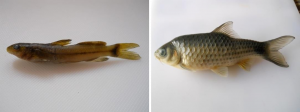
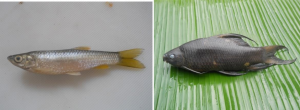
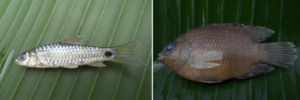
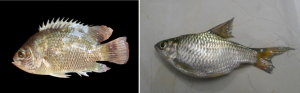
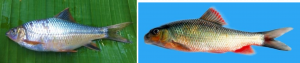
IMAGES OF NEW FISHES DISCOVERED AND GIVEN SCIENTIFIC NAME BY MATHEWS PLAMOOTTIL
 |
|
| Glyptothorax elankadensis | Horabagrus melanosoma |
 |
|
| Macrognathus albus | Macrognathus fasciatus |
 |
|
| Mystus heoki | Mystus indicus |
 |
|
| Mystus keralai | Mystus menoni |
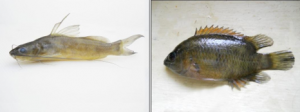 |
|
| Mystus catapogon | Pristolepis pentacantha |
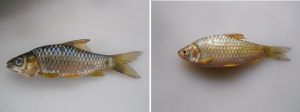 |
|
| Puntius dolichopterus | Puntius nelson |
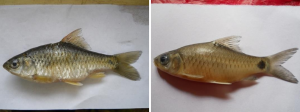 |
|
| Puntius nigronotus | Puntius viridis |
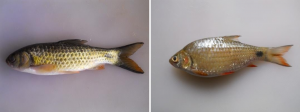 |
|
| Systomus chryseus | Systomus rufus |
 |
|
| Batasio flavus | Systomus laticeps |
 |
|
| Rasbora ataenia | Labeo filiferus |
 |
|
| Puntius euspilurus | P. procerus |
 |
|
| Pristolepis pauciradiatus | Hypselobarbus procerus |
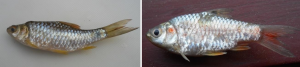 |
|
| Puntius kyphus | Puntius sanctus |
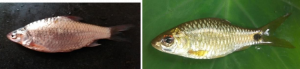 |
|
| Systomus gracilus | Puntius ocellus |
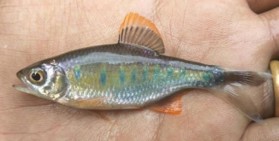 |
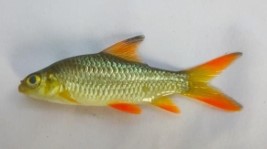 |
| Bariius cyanochlorus | Hypselobarbus nitidus |
 |
|
| Osteochilicthys formosus | Osteochilichthys elegans |
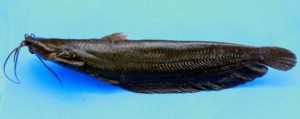 |
| Heteropneustes fuscus |
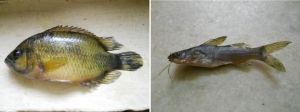
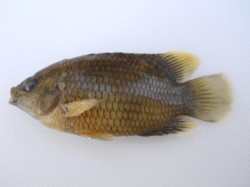
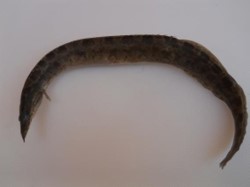
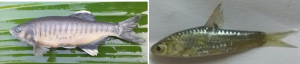
IMAGES OF FISHES REDISCOVERED BY MATHEWS PLAMOOTTIL, AFTER ONE AND A HALF CENTURY
 |
|
Pristolepis marginata |
Mystus armatus |
 |
 |
| Pristolepis malabarica | M. malabaricus |
 |
|
| Barilius rugosus | Puntius puckelli |
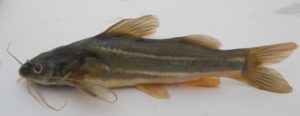 |
| Mystus keletius |
MATHEWS PLAMOOTTIL IS THE REVIEWER EDITORIAL BOARD MEMBER OF THE FOLLOWING JOURNALS
- Journal of Experimental Zoology India (Reviewer)
- Journal of Environmental Biology (Reviewer)
- The Indian Forester (Reviewer)
- The Check List, theJournal of Biodiversity-Data (Reviewer)
- Flora & Fauna (Editorial Board Member)
- Journal of Advanced Zoology (Reviewer)
- Bioglobia (Editorial Board & Advisory Board Member)
- Biological Forum-(EditorialBoardMember)
- Biobullettin (Editorial Board Member)
OTHER RECOGNITIONS RECEIVED
Govt. of India publishes book named “Animal Discoveries” every year. “Animal Discoveries 2014”.contains new animals discovered and named in India during 2014. It describes 23 freshwater fishes; of this 7 (30.4 %) were the fishes discovered and named by Mathews Plamoottil.17 % of fishes described in “Animal Discoveries 2013” were also of Mathews Plamoottil. Out of 26 new fishes discovered and included in “Animal Discoveries- 2015”, two were discovered by Mathews Plamoottil.4 (17%) fishes out of total 24 new fishes described in “ Animal Discoveries 2016” were also of Dr. Mathews Plamoottil. ‘Animal Discoveries’ released on 5th June 2018 by Prime Minister Sri. Narendra Modi contains two new freshwater fishes discovered by this researcher. In“Anima Discoveries- 2020”out of the 22 new freshwater fishes, 4 were discovered, described and scientifically named by this researcher. In ‘Animal Discoveries 2021’ only one new freshwater fish discovery was included from Kerala state; that was Mathews Plamoottil’s ‘Heteropneustes fuscus’. ‘Animal Discovery 2022’ of Govt. of India comprises discovery of three new freshwater fishes of Mathews Plamoottil namely Osteochilicthys elegans, O. formosus and Hypselobarbus nitidus.
NEWS (ABOUT THE FINDINGS OF MATHEWS PLAMOOTTIL) PUBLISHED IN DAILY NEWS PAPERS
- Catfish species rediscovered in The Hindu, daily news paper, 5 October, 2020
- “A silver fish from Velamkanni” The Hindu, daily news paper, May 25, 2020
- ‘New Hump- backed fish found in Thiruvalla Stream’ The Hindu, daily news paper 21 October,
- New species of eel fish found in Manimala River, The Hindu, 15, March,
- New fish species The Hindu, 5th Oct 2015.
- Three new fish species in Manimala The Hindu, 15 March, 2015.
- New catfish species sighted at Manimala River. The Hindu, 13 October,
- New catfish adds to Deccan Chronicle, 2 July, 2016.
- New catfish species reported from The Hindu, 29 may, 2016.
- New fish species discovered from Western The Gulf Today, 26 December, 2015
- Velinjil Malsya kudumbathilekku oru adhithi koodi”-11 November 202- Madhyamam ( A leading Malayalam News Paper)
- New fish species discovered in The Hindu, 2015. July 19.
- “Puthiya sudha jala malsyathe kandethi”- 11 November 2020, Janayugam, a leading News paper of Kerala.
- Nammude kaarikkum peraayi’11 January 2022 Madhyamam (Leading daily news paper of Kerala)
- Angane nammude kaarikkum swontham peraayi“ 12, January, Malayala Manorama (The 2nd largest daily news paper of India)
- Batasio: Second of its species to be found after Travancore Talk, 5th Oct 2015
- New fish species Make me feed, 5/10/2015.
- New eel fish species found in Kerala river, India journal, 3/16/2014.
- New fish species discovered in Kerala, The Hindu, 19 July, 2015
- Four new fish species discovered in Kerala, Times of India, the daily news paper11 February,
- Pidakkunnu Sasthram. Malayala Manorama, (The 2nd largest daily news paper of India) 20 July 2013.
- Four new fish species found in The Gulf Indian Weekly, 11 March, 2015.
- A new species of fish discovered in Kerala, India Today, 19 July,
- In Kerala four new species East Coast daily, 11 February 2015.
- Four new fish species discovered in The Gulf Today, 12 February, 2015.
- Unique species of fish identified in Manimala River. The Times of India (the leading daily news paper of India), 11, August, 2014.
- Four new species of fish found in India Today, 12 February, 2015.
- Researchers unravel more of the Western Ghats The Hindu, 8 August, 2014.
- Unique species of fish identified in Manimala River. The Times of India, 11 August, 2014.
- Puthiya Sudha Jala Malasyathe Malayala Manorama (The 2nd largest daily news paper of India), 27, July, 2015.
- Varshangalku Sesham Vayanaadan Aarakane Mathrubhoomi (a leading daily news paper of south India), 29 September 2013.
- Apoorvayinam Malsyathe Maadyamam (a daily news paper of Kerala), 9 MAy 2013.
- Puthiya Sudha Jala Malsyathe Malayala Manorama (The 2nd largest daily news paper of India), 9 August 2014.
- Kuruva Paral Vargangalile Naalu Puthiya Sudhajala Malsyangale Malayala Manorama Manorama (The 2nd largest daily news paper of India), 13 February, 2015.
- Puthiya Meesakkaaran Malsyathe Malayal Manorama, (The 2nd largest daily news paper of India), 18 October 2014.
- Keralathil Puthiya Naalu Sudha jala Malsyangale Mathrubhoomi, 13 February, 2015.
- Puthiya Sudha jala malyathe Malayala Manorama (The 2nd largest daily news paper of India), 27, July, 2015.
- Puthiya Inam Paral Malsyathe Mathrubhumi (a leading daily news paper of south India), 20 July, 2015.
- Puthiya Naalu Sudha jala malsyangale Mangalam, (a leading daily news paper of south India) 12 February, 2015.
- Kayamkulam Kanalil Puthiya Inam Sudhajala malsyam. Janayugam(a leading daily news paper of south India), 20 July, 2015.
- Puthiya Malsyathe Mathrubhumi (a leading daily news paper of south India). 28 january, 2014.
- vayanaadan Aarakane Malayala Manorama (The 2nd largest daily news paper of India), 1 october 2013.
- Kerathil Naalu Navagatha Malsyangale JanmaBhoomi, 25 November, 2013.
- Keralathinu Oru Malsyam Malayala Manorama, Manorama (The 2nd largest daily news paper of India) 15 October, 2014.
- keralathil Ninu Puthiya Naalu Malsya Inangale Mathrubhumi, 20 November 2013.
- Illennu Karuthiya Sudha jala Malsyathe 164 Varshangalkusesham Kandethi. Malayala Manorama, 28 August 2013.
- malsya Ishtamaanu Malayala Manorama. 21 December 2013.
- Naalu puthiya sudha jalamalsyangal Janayugom. 16 February 2015.
- Sasthralokathekku 4 sudhajalamalsyam Desaimaani, 20 November 2013.
- Kerathil puthiya inam paralmalsyathe Mathrubhoomi, 20 2015.
- New freshwater fish reported from Alappuzha; The Hindu, 12. 2016
- New freshwater fish reported from Alappuzha, Live News Today, 12.2016
- “Alappuzhayil puthiya sudha jala malsyathe kandthi”. Janmabhoomi, 12.2016
- New species of fish identified after 150 years, Deccan Chronicle, 12.2016
- Puthiya malsyathe Desabhimani, 1812. 2016
- Puthiya malsyathe Mathrubhoomi, , 1812. 2016
- Puthiya inam aattu chembelliye kandethi, Malayala Manorama, 08.2017.
- Malayaliyude Gaveshanam—Putiya malsyathe barmayil kandethi, Desafimaani, 08.2017.
- vamsanasam Vannu maranjilla: Puzhukkoori Malsyam Janayugam, 3 may 2014.
LIST OF INFORMATION (ABOUT NEW FISHES OF DR. MATHEWS PLAMOOTTIL) INCLUDED IN VARIOUS SCIENTIFIC DATABASES
- ‘Puntius dolichopterus’ — Wikipedia
- ‘Batasio flavus’ — Newkis .com
- ‘Batasio flavus’ — Wkispecies
- ‘Batasio flavus’ — Fish base
- ‘Batasio flavus’ — Planetcatfish
- ‘Batasio flavus’ — Wikipedia
- ‘Batasio flavus’ — Academia
- ‘Glyptothorax elankadensis’ – Thomas Reuters
- ‘Glyptothorax elankadensis’ – Planetcatfish
- ‘Glyptothorax elankadensis’ – Wkispecies
- ‘Glyptothorax elankadensis’ – Species
- ‘Horabagrus melanosoma’ – Wkispecies
- ‘Horabagrus melanosoma’ – Fish base
- ‘Macrognathus albus’ – Wkiversity
- ‘Macrognathus albus’ – Wkiwand
- ‘Mystus indicus’ – Fishbase
- ‘Macrognathus fasciatus’ – Fish base
- ‘Macrognathus fasciatus’ – Wikispecies
- ‘Macrognathus albus’ – My Tropical fish
- ‘Macrognathus albus’ – Fishbase
- ‘Macrognathus fasciatus’ – Wikipedia
- ‘Mystus menoni’ – Fish base
- ‘Mystus heoki’ – Global species
- ‘Mystus menoni’ – Wikispecies
- ‘Mystus heoki’ – Fish base
- ‘Mystus heoki’ – Wikispecies
- ‘Mystus indicus’ – Wikispecies
- ‘Puntius nelsoni’ – Fish base
- ‘Puntius dolichopterus’ – Fish base
- ‘Puntius viridis’ – Fish base
- ‘Puntius dolichopterus’ – Wkispecies
- ‘Puntius dolichopterus’ – My Tropical fish
- ‘Puntius nelsoni’ – Wikipedia
- ‘Puntius nigronotus’ – Academia
- ‘Puntius nigronotus’ – Fish Base
- ‘Puntius nigronotus’ – Tropical Fish Base
- ‘Puntius nigronotus’ – Wikipedia
- ‘Puntius viridis’ – Wikipedia
- ‘Puntius viridis’ – Wikispecies
- ‘Puntius viridis’ – Biolib
- ‘Pristolepis pentacantha’ – Fish Base
- ‘Pristolepis pentacantha’ – Wikipedia
- ‘Pristolepis pentacantha’ – My Tropical fish
- ‘Systomus laticeps’ – com
- ‘Systomus rufus’ – Fish Base
- ‘Systomus chryseus’ – Fish Base
- Angane nammude kaarikkum .“ Kerala State Council For Science and Technology, State of Environment and Related Issues.
- Two New Mystus, Home Forum index Identification Taxonomy & Science News, Planet Catfish, 9 November, 2013.
- World Register of Marine Species—Puntius kyphus, Plamoottil, 2019
- CABI- CAB direct News-‘Puntius kyphus, a new fish species from Kerala, India’
- cz News- Taxon Profile- Species- Puntius kyphus Plamoottil, 2019
- Naturalist. Ca News- ‘Puntius kyphus’
- Biodiversity4all news- ‘Puntius kyphus’
- KCW-Forum, Killifische, Cichliden und Welse, A German News Site- ‘Puntius kyphus Plamoottil’
- “What species is ‘Systomus gracilus’ that has been identified in the Ganges?”- GK Today news for Public Competitive Exams
- UPSC 24/7- UPSC Exam Current Affairs- ‘Systomus gracilis – why in News’
- KHAS ABAR- trending News Channel IN Hindi—‘Systomus gracilis’
- CABI- CAB direct news- “Systomus gracilis a new fish .”
- Акварист — новости аквариумистики
- Planet catfish- ‘Heteropneustes fuscus’
- ВСЕ О ПРЕСНОВОДНЫХ РЫБАХ- Пунтиус кифус- A Russina News
- AIIAD – Associazione Italiana Ittiologi Acque Dolci- Fish in News- ‘Heteropneustes fuscus’
- World Fish Wiki- ‘Heteropneustes fuscus Plamoottil, 2021‘
- Welt der Fische / World of Fishes- Newest Taxa Heteropneustes fuscus- Januaery 11,
- World fish Wiki—“Puntius kyphys Plamoottil, 2019”
- Naturalist Canada News- Puntius kyphus
- New Taxa – 2020 | Welt der Fische / World of Fishes
- Silver hued fish Puntius Sanctus – Pinterest
- Kerala team nets silver fish in Velankanni, Envis Centre, Ministry of Environment & Forest, Govt. of India
- Civil Services Chronicle July 2020 Issue- Puntius Sanctus
- Unique species of fish identified in Kabani River, India Environment Portal-Knowledge for Change, 11 August, 2014.
- Discovery of new fish species in Kerala- Career Ride.com, 21, July, 2015.
- Four New fish species discovered in Kerala. Reach Kerala.com-Top Read Articles, 12 February, 2015.
- Four new fish species discovered in Envis Network, Govt of India.3 March, 2015.
- Four new fish species discovered in Geral Knwoledge Today, 12 Febraury 2015.
- More New Species Discovered In Western Ghats, Ambition IAS, August 9, 2014
- Puntius nelsoni – Current Affairs- General Knowledge Today, 12 February,
- Puthiya Malyathe Sworgeeya Dwoni, 2 June, 2013.
- Wikipedia- Puntius kyphus Plamoottil
- Wikipedia- Heteropneustes